Prove where every gram of material goes.
MFA Studio maps your material flows and checks that every process balances. Built for sustainability teams and their consultants.
Made for changemakers like



One real study, every process balanced.
Amsterdam's organic waste, from households and food streams through incineration and anaerobic digestion out to emissions, fertiliser and green gas. Inputs reconcile against outputs at every step.
A pretty diagram can still be wrong. This one has to add up.
Every process obeys conservation of mass. MFA Studio checks it for you and flags the ones that do not reconcile, so a good-looking Sankey cannot hide a broken number.
Assembly
Example, 2025
in − out − ΔstockWatch the residual reconcile to zero.
Everything an MFA needs, in one place.
Import your data
Upload CSV or Excel and map columns to flows. Unknown processes become drafts you confirm, bad units get flagged before anything lands.
Model the system
Define processes, flows, stocks and materials inside a stated boundary. The same system fills with new data each reporting period.
Check the balance
Inputs minus outputs minus stock change, computed per process against a tolerance you set. Imbalances surface on the diagram, not in a spreadsheet.
Hand it over
Invite a client as viewer to explore and query, or as editor to keep the study current. Roles are enforced on the server.
From raw spreadsheet to a living study.
Import what you collected
Drop in a spreadsheet of flows. Map the columns once, review the validation report, and your first diagram renders.
Balance and refine
Read the residual on each process, correct the flows that do not reconcile, and confirm the draft processes the import created.
Publish and hand over
Invite the client to their own view. They switch periods, query results and add next year's data long after the engagement ends.
Built for the way MFAs really get made.
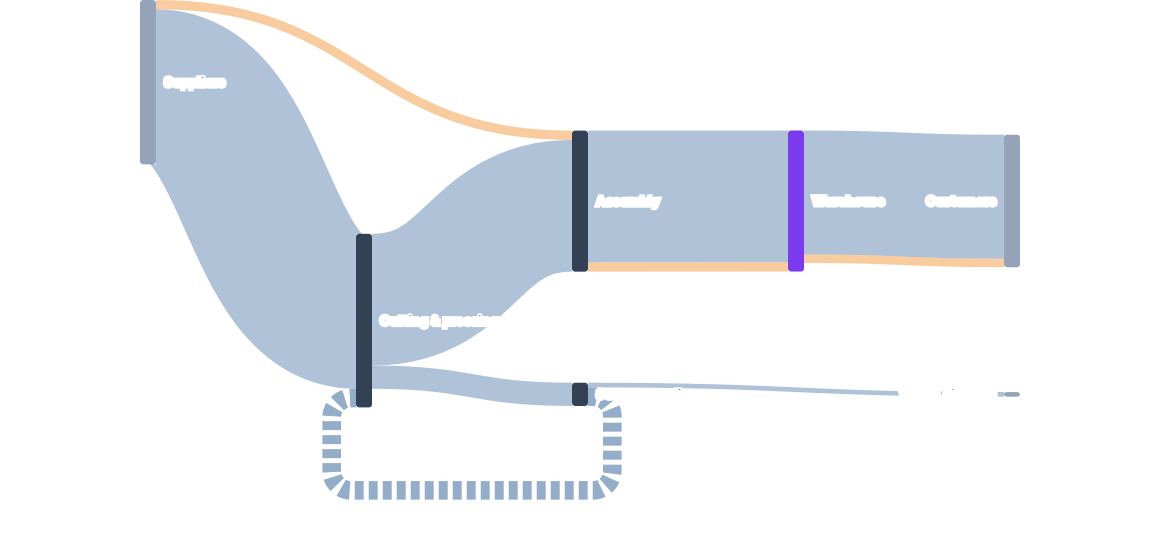
Track physical materials across suppliers, processing, stock and disposal inside one boundary.
The study outlives the engagement.
Hand it to the client and they keep filling it, period after period.
One study, two kinds of access.
Build it as the consultant, then hand the client a view they can own without the risk of breaking the model underneath.
- Import data and map columns
- Model processes, flows and stocks
- Set the balance tolerance
- Invite clients and set their role
- Explore the diagram and switch periods
- Read balance reports and query results
- Add a new period through guided import
- Export figures without touching the model
“The balance check catches the errors I used to find three weeks later in review. Leaving the client a working model instead of a PDF changed how our engagements end.”
Start your first material flow study today.
Model a system, balance it, and share it with your client. No spreadsheet gymnastics required.
Start building